Technology
has been good to cyclists. Metallurgical breakthroughs have given
us flexible, lightweight frames. Computer-aided design has given
us gears that don't slip and brakes that don't squeal. We've
got high-impact shock absorbers and low-friction hubs and Kevlar
tires.
And then there's the saddle.
The saddle
has always been the bicycle's Achilles heel--an instrument of
torture to rival anything dreamed up by the Marquis de Sade.
From the crude equilaterals of the penny-farthing to the sleek
parabolas of the Tour de France, conventional saddles share a
fatal flaw--a hard-nosed horn that grinds against those tender
parts that least like to be ground against (by a bicycle, at
least).
Bicycle saddles
are coming under renewed scrutiny: Last month, researchers at
the National Institute for Occupational
Safety and Health found a
higher incidence of erectile dysfunction among bicycle cops; a study
at Boston University concluded that professional cyclists are four
times more likely to suffer from impotence than other athletes.
And it's not
just a guy thing. Riders of both genders may suffer numbness, ache
and related crotch distress.
Now a Portland
inventor has come up with an unorthodox solution--a split-surface
platform designed
to reduce pressure on the soft tissues
that lurk in
your nether regions. "It's a radical concept," says Jim
Bombardier, president of Bycycle Inc. "But nothing else out
there fits the curvature of the pelvic girdle."
A computer
consultant by profession, Bombardier set out on his quest for
a better saddle
in 1997, after his fiancée shelled out $1,000
for a new bike so they could go riding together. Around the same
time, he began to experience a discomfiting numbness in his nether
regions.
He tried a couple of "alternative" saddle designs, but
none seemed to solve the issue.
"You could
say I was creatively constipated," says Bombardier.
With
missionary zeal, Bombardier plunged into the science of seating.
He observed dissections at the school of anatomy
at Oregon Health & Science
University. He studied skeletons. The problem with conventional
saddles, Bombardier concluded, is that they provide only
minimal support for the
ischiopubic rami and their buddies, the ischial tuberosities--better
known as the "sit bones." Conventional saddles also
compress the soft tissues--including delicate veins, arteries
and nerves--that
run from your perineum to your crotch.
Bombardier's
goal was a seat that mimics the flying V-shape of the sit bones.
The
problem is that no two Vs are exactly
alike.
In fact,
there's
a wide profusion of angles, though men tend to have narrower
girdles than women do.
After innumerable
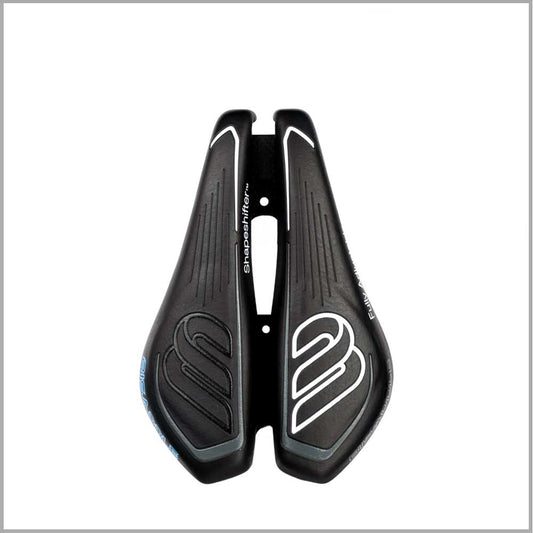
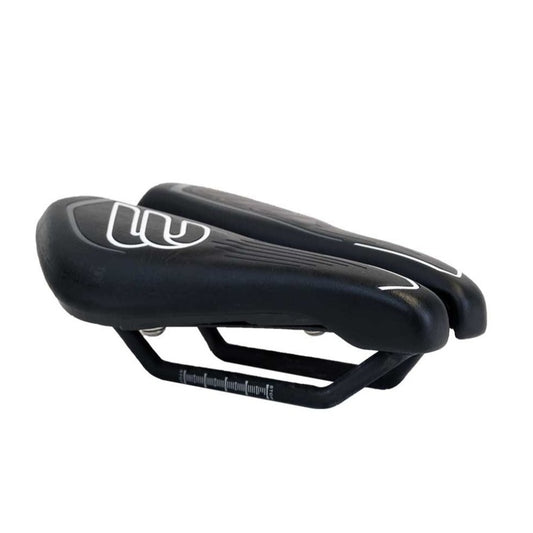
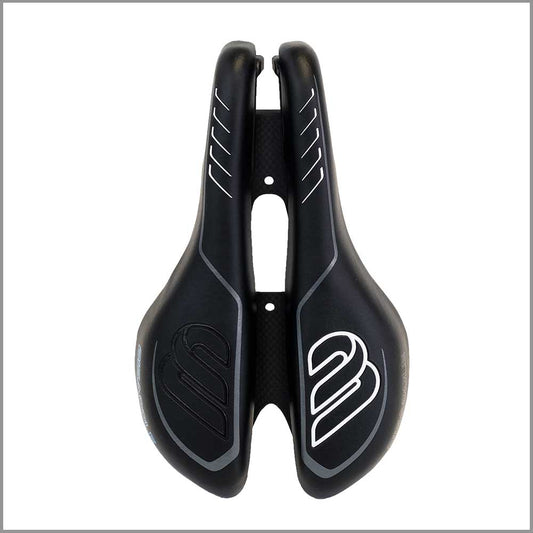
prototypes, Bombardier developed a radical solution: split the
saddle into two halves--each
contoured
to hug a tuberosity--and
make the angle adjustable, so that riders can customize
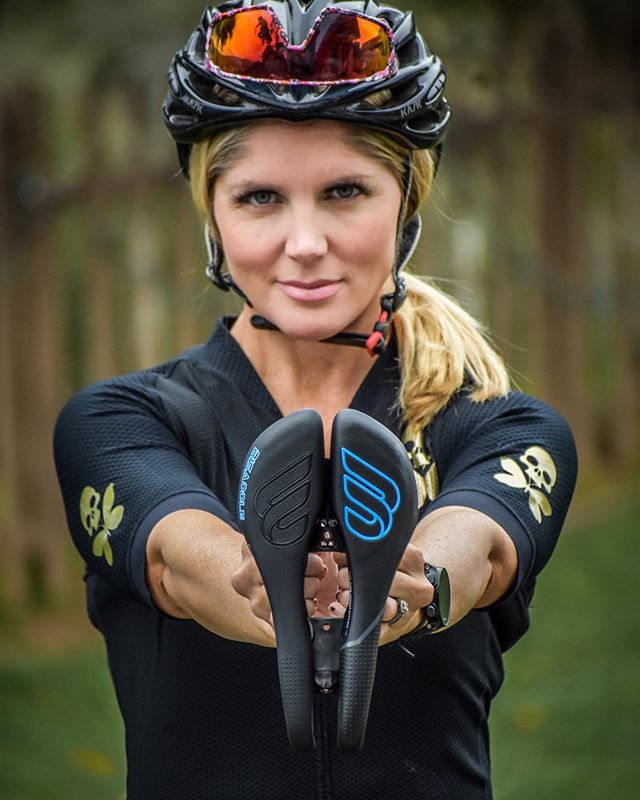
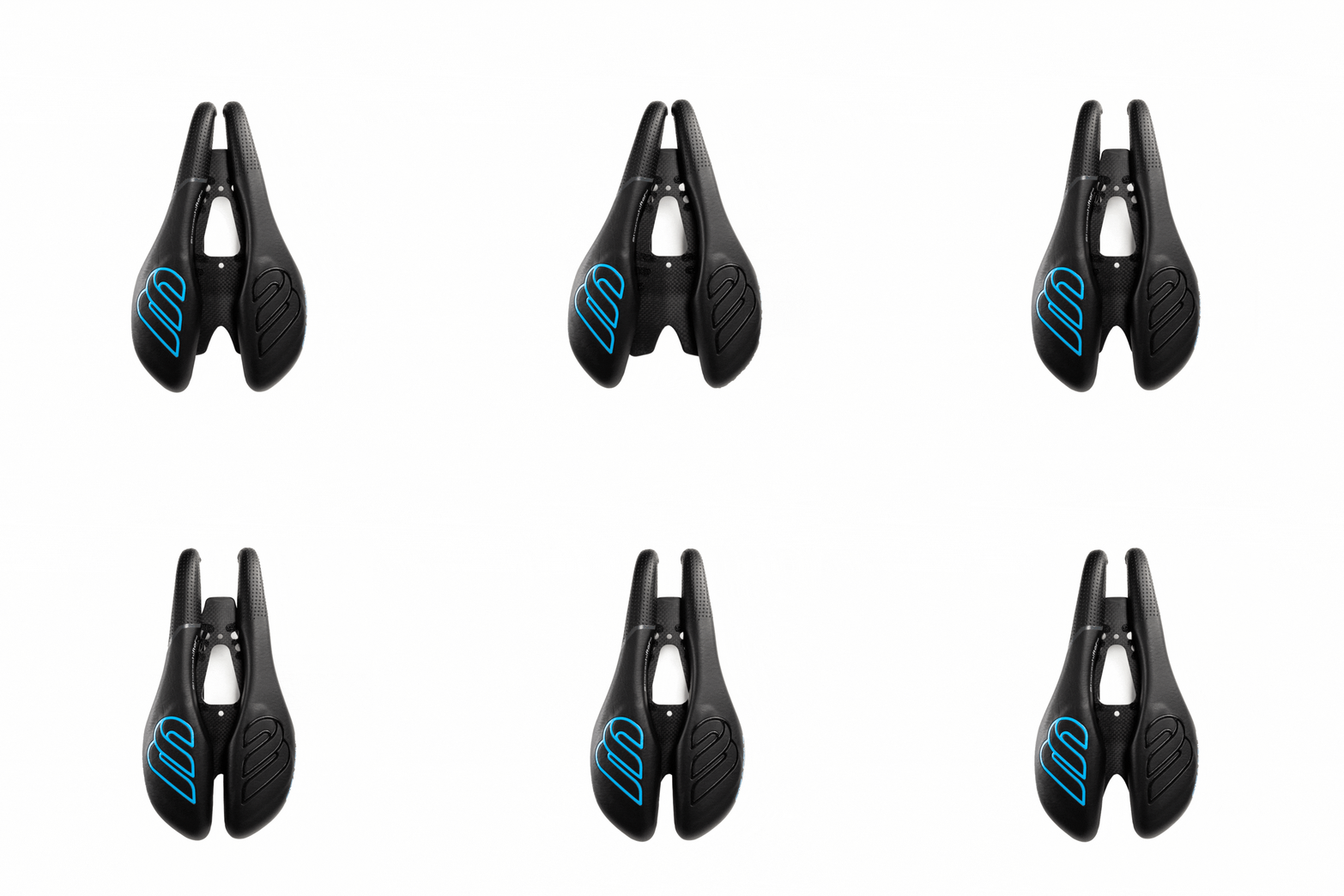
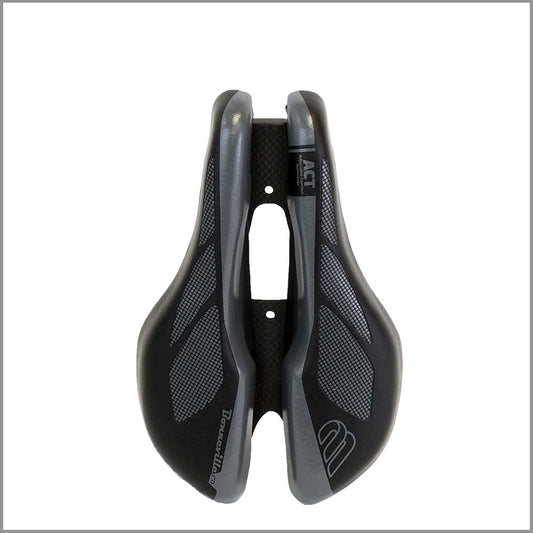
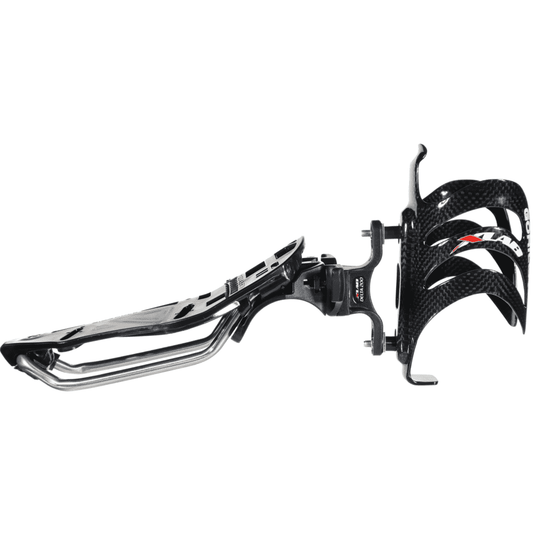
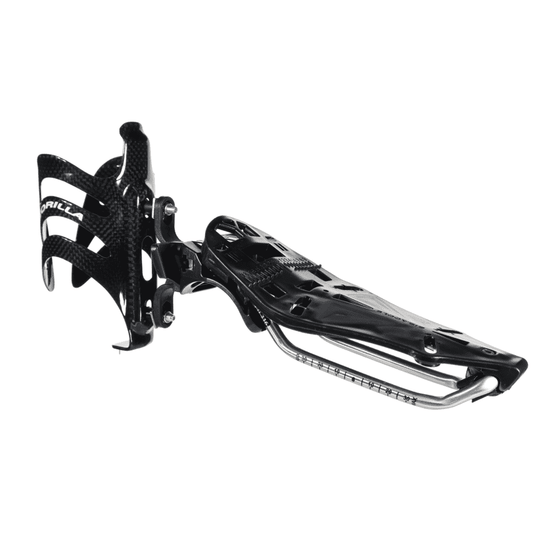
it to their own unique shape. The result is the BiSaddle.
Priced
at $69.95 and weighing 30 ounces, the BiSaddle resembles a
pair of Mickey Mouse ears. Shorter than conventional
saddles, it's
made
of a visco-elastic elastomer with the approximate consistency
of a bouncy
rubber ball.
Adjusting the
BiSaddle to fit your bike and your butt requires patience. You
may have to tweak the height
of
the post,
the angle of tilt and
the position of the handlebars, for starters. After
you've got that straight,
you still have to fiddle with the BiSaddle itself,
so that its two halves provide maximum support for your
sit bones.
Once the preliminary tinkering is out of the way, the
first few rides may be a little, well, strange. The
BiSaddle fits so snugly
into
your tuberosities that it feels like you're being goosed.
(Bombardier calls
this sensation "cupping your buns.") The
saddle also requires you to adopt a slightly different
posture when you pedal. This is hard
to explain, but it's a little bit like walking in a
new pair of shoes.
I did find
some loss of power when riding uphill, though this was compensated
by extra
momentum on the way down.
However, this is
likely due to adjustment
issues, Bombardier says. "People don't have
a clue what their pelvic anatomy's like." Some
riders take as many as 100 miles to arrive at the
optimal
fit.
But after four
or five days, the BiSaddle proved its merit. I put it through
its paces on my regular
two-mile
commute,
which
involves
several
bumpy intersections where I usually stand on the
pedals to avoid a crotch-mangling experience. The
BiSaddle
absorbed the blows
without complaint and left
my private parts unpummeled. In fact, after a few
days, I
began to realize that I was no longer experiencing
the low-level, half-conscious residual
ache I got from my old saddle. Eventually, I began
to forget I was
using the BiSaddle at all--a positive omen, because
the best saddle is the
one you don't even notice.
The BiSaddle
isn't for everyone. If you're comfortable with your current saddle,
it's
probably not worth
the expense or the hassle.
But if you're
worried about bicycle-induced crotch issues,
or just tired of that residual ache, the BiSaddle
is definitely
worth
a
look.
Originally
published on WEDNESDAY, 5/21/2003
|